
Alg4Nut
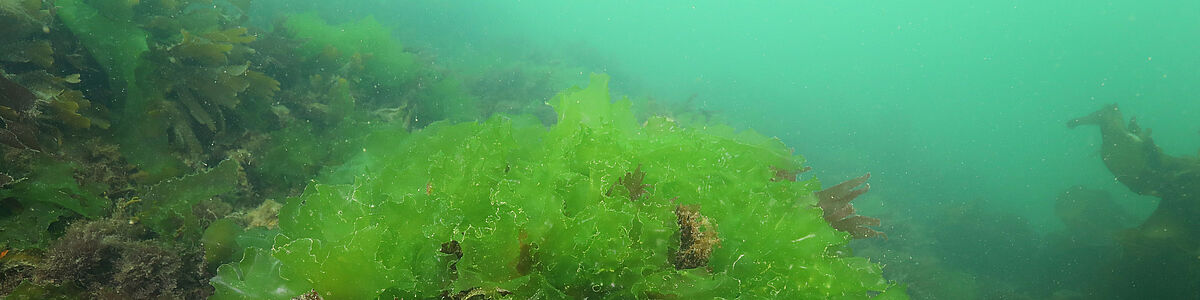
The “Alg4Nut” collaborative project is investigating the impact of marine algae that can be cultivated in the Baltic Sea region on animal health. The subproject led by the Department of Pharmaceutical Biotechnology at the University of Greifswald involves studies of the rumen microbiome and bacterial strategies for utilizing algal polysaccharides. In addition, the Greifswald subproject is contributing to the development of new biotechnological production strains.
The rumen of cows is a large fermentation chamber that harbors a diverse population of anaerobic microorganisms, which enzymatically break down plant polysaccharides into sugar building blocks and short-chain fatty acids such as acetate, propionate, and butyrate. Methanogens and other microorganisms convert these intermediate products into CO₂ and methane. Phyla such as Firmicutes and Bacteroidota play a central role in polysaccharide degradation. The Alg4Nut consortium is investigating the influence of algal polysaccharides as feed additives on these microorganisms and on animal health. The aim is, on the one hand, to determine whether selected algal polysaccharides can be digested in the rumen at all, and, on the other hand, to assess whether these bioactive glycans exert a positive prebiotic effect on the animals. The biochemistry of algal utilization in the rumen and intestines of cows, as well as the physiological mechanisms of the involved microbes, are not yet fully understood. This is where the Alg4Nut project comes in. In collaboration with other partners in the consortium, we are investigating the degradation of marine polysaccharides by rumen bacteria, focusing on ulvan from green algae and porphyran from red algae. We use metagenomic, metatranscriptomic, and metaproteomic analyses to investigate the physiology and activity of the rumen microbiomes in response to these algal biomasses. We determine specific expression patterns of abundant key bacteria in the rumen to identify polysaccharide-utilizing enzymes and metabolic pathways and to characterize them in vitro using molecular biological and biochemical methods. Through the experimental approach in this project, we hope to identify physiological adaptation mechanisms of the rumen microbiome following algal feeding. Our goal in Alg4Nut is to discover potential metabolic pathways as well as new enzymatic functions involved in the utilization of algal polysaccharides by key rumen bacteria.
Responsible staff members:
Daniel Bartosik, Christian Bettoni, Margarida Freitas